The Practice
What is Vipassana?
Vipassana is a Pali word meaning “clear seeing” or “insight.” It refers to a practice of meditation developed by the Buddha 2,500 years ago for the direct investigation of experience — and, through that investigation, liberation from suffering.
The Core of the Practice
Vipassana works by training attention. In ordinary life, our minds are reactive — constantly pulled toward pleasant experiences, pushing away unpleasant ones, and ignoring neutral ones altogether. This reactivity is the source of much of our suffering.
Through meditation, we learn to observe experience as it is: without adding judgment, without projecting stories, without trying to make it be other than it is. This sounds simple. It is surprisingly difficult — and, over time, profoundly liberating.
The traditional objects of Vipassana meditation are the Four Foundations of Mindfulness (Satipatthana): body sensations, feelings (pleasant/unpleasant/neutral), mental states, and the phenomena of experience itself. As practice matures, we begin to see the three characteristics of all conditioned experience:
- Anicca — Impermanence: everything arises and passes
- Dukkha — Unsatisfactoriness: clinging to impermanent things causes suffering
- Anatta — Non-self: what we call “I” is a process, not a fixed entity
This direct seeing — not as an intellectual understanding but as lived experience — is what the tradition calls insight (vipassana). With deepening insight comes equanimity, compassion, and ultimately liberation.
How We Practice at IMH
At IMH, we teach a broad-based approach to Vipassana in the Western Theravada tradition. A typical practice session might include:
- Breath meditation — using the breath as a primary anchor for attention
- Body scanning — moving attention systematically through physical sensations
- Open awareness — allowing whatever arises to be the object of attention
- Walking meditation — bringing mindfulness to movement and physical sensation
- Loving-kindness (metta) — cultivating compassion toward self and others
These aren’t separate techniques but aspects of a unified path. We learn to stabilize attention, then to investigate with that attention, then to let wisdom arise naturally from that investigation.
Retreat: Deepening the Practice
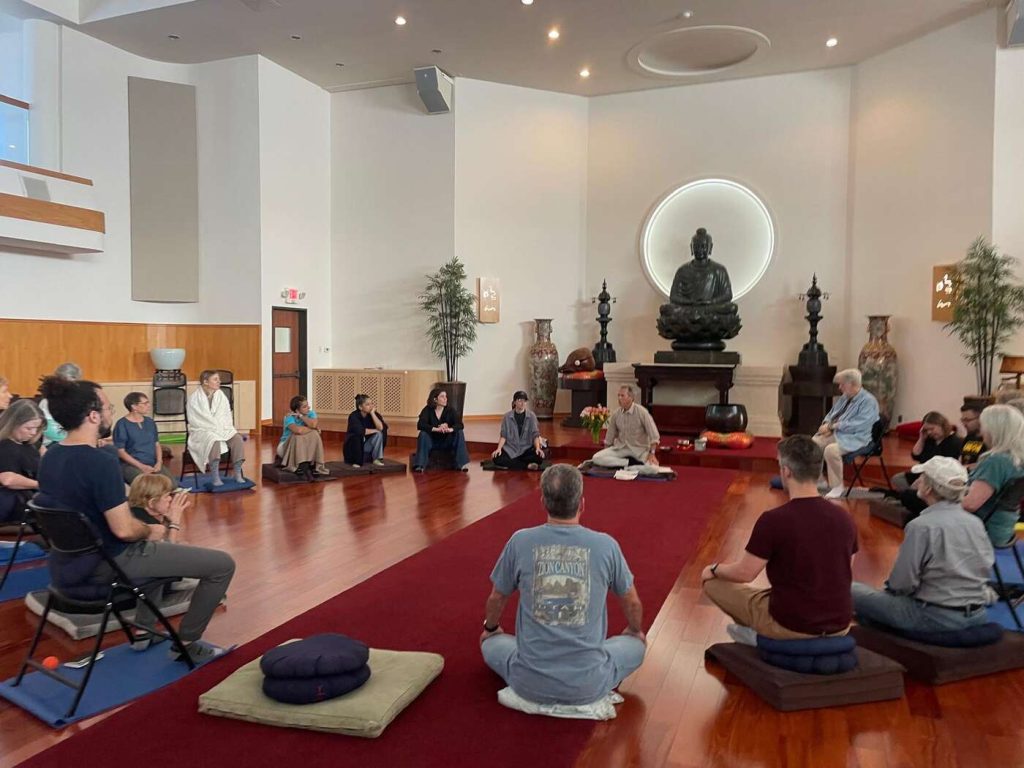
Sustained silent retreat is where Vipassana practice can deepen. Without the constant demands of ordinary life — phone, email, conversation — the mind has a chance to become very quiet. In that quiet, insights arise that may be difficult to access in the busyness of daily practice.
“Only when the mind sees for itself, can it uproot and relinquish attachment.”
— Ajahn Chah
Common Questions
Is Vipassana a religion?
Vipassana is a meditation practice with roots in Buddhist tradition, but many people practice it without adopting Buddhist religious identity. The practices of mindfulness and insight are essentially psychological — you can apply them within any belief system or none at all. That said, the deeper teachings of the Dharma offer a complete and profound worldview that many practitioners find compelling on its own terms.
How is Vipassana different from other types of meditation?
Many meditation systems cultivate concentration or relaxation as their primary goal. Vipassana uses concentration as a foundation for insight — the direct investigation of experience to understand its true nature. This investigation, when developed, leads to wisdom (prajna) and ultimately to liberation from suffering. Other practices like Loving-kindness (metta) complement Vipassana and are often practiced alongside it.
Do I have to sit on the floor or in a lotus position?
No. The instruction in Vipassana is to find a posture that allows you to be both relaxed and alert. Most of our practitioners sit in chairs. Others use meditation cushions (zafus), benches, or floor mats. The specific posture is far less important than the quality of attention you bring to it.
How long does it take to experience results?
Many practitioners notice subtle benefits — improved attention, more equanimity, less reactivity — within the first few weeks of regular practice. Deeper insights develop over months and years of sustained practice, especially with retreat support. Vipassana is not a quick fix but a lifelong path that rewards sustained commitment.
What’s the relationship between mindfulness and Vipassana?
“Mindfulness” as widely taught in secular contexts (MBSR, mindfulness apps, workplace programs) draws significantly from Vipassana. The Buddhist tradition uses mindfulness (sati) as a tool within a broader framework aimed at liberation — not merely stress reduction. Vipassana practice includes mindfulness but situates it within the larger path of ethics, concentration, and wisdom.
Ready to try Vipassana?
The best way to understand Vipassana is to practice it. Come to a Monday sitting and experience it directly.